Research
We develop and apply new, often in situ, electron microscopy techniques to image and quantify the nanoscale phenomena behind the structure–property relationships of materials. Our work spans nanomechanical testing, deformation in metals, polymer structure, laser–materials interactions and phase transformations.
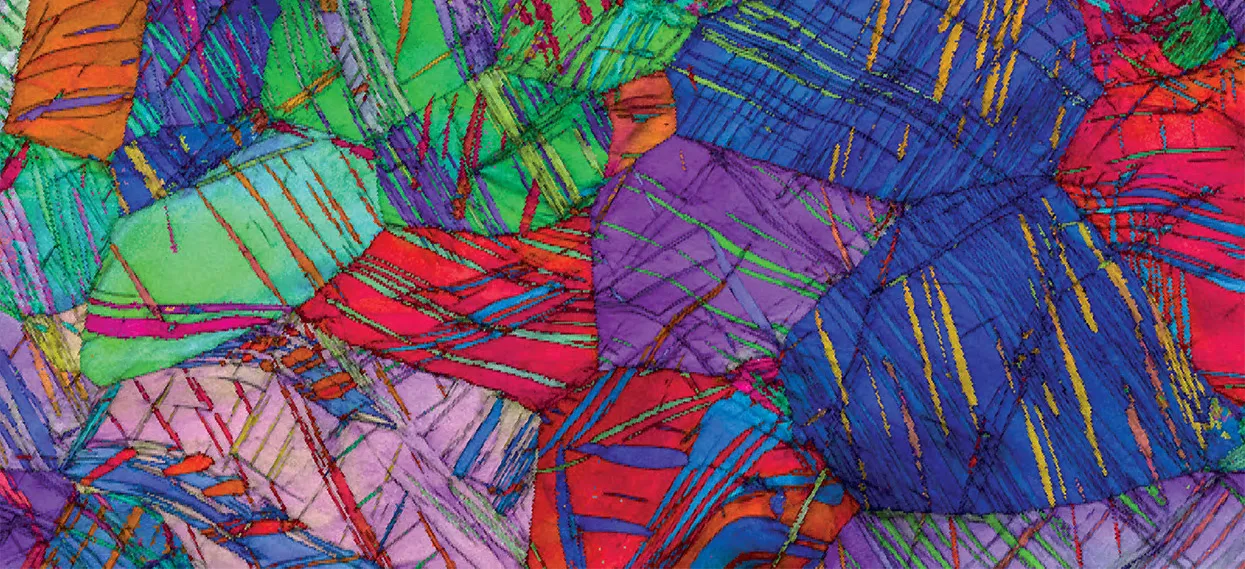
Metallurgy
We study the fundamental aspects of structure and chemistry in metallic alloys that determine structural properties such as strength, ductility, fracture toughness and resistance to corrosion and irradiation.
Selected papers
- Kink bands promote exceptional fracture resistance in a NbTaTiHf refractory medium-entropy alloy
- Rejuvenation as the origin of planar defects in the CrCoNi medium entropy alloy
- Grain refinement in titanium prevents low temperature oxygen embrittlement
- Exceptional fracture toughness of CrCoNi-based medium- and high-entropy alloys at 20 kelvin
- Cryoforged nanotwinned titanium with ultrahigh strength and ductility
- Short-range order and its impact on the CrCoNi medium-entropy alloy
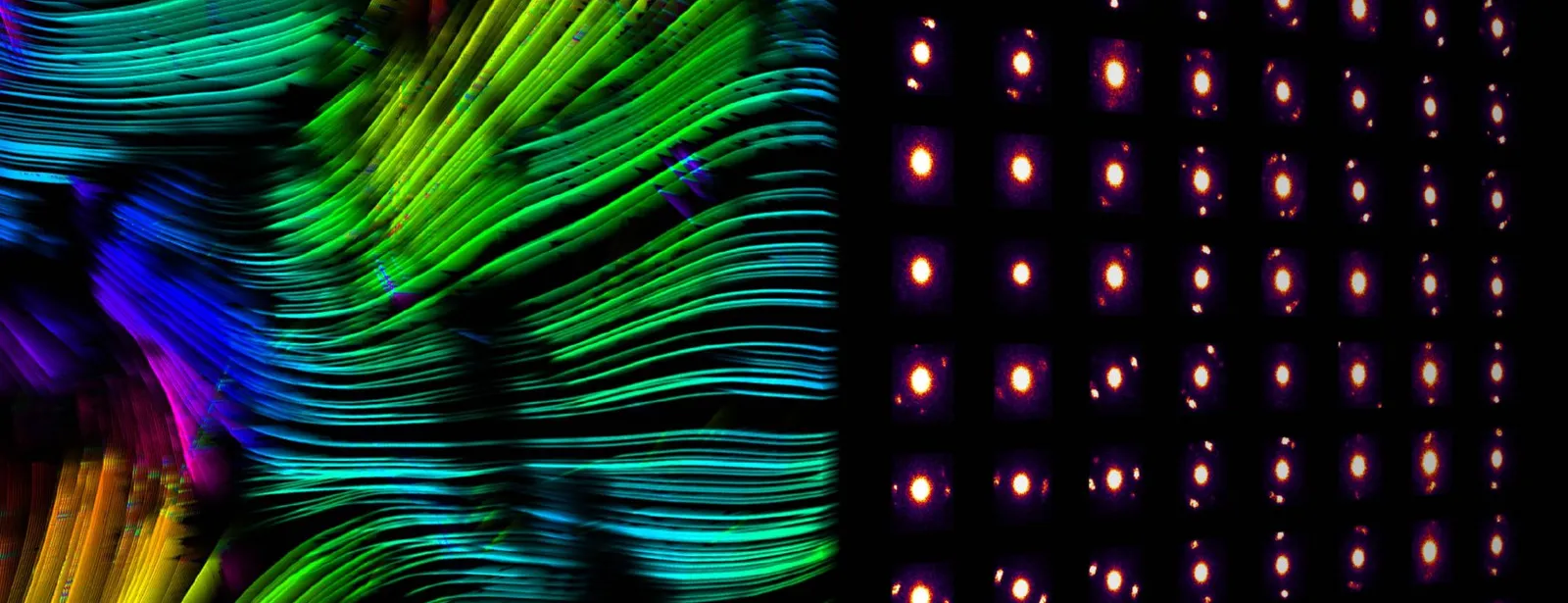
In situ TEM & 4D-STEM Methods
Much of this work depends on methods we develop: 4D-STEM for mapping strain and structure during mechanical tests, and in situ TEM Raman spectroscopy and laser-based materials modification inside the microscope.
Watch: the 4D Camera reaches a new frontier in speed ↗Selected papers
- Nanoscale mapping of point defect concentrations with 4D-STEM
- Disentangling multiple scattering with deep learning: application to strain mapping from electron diffraction patterns
- Automated crystal orientation mapping in py4DSTEM using sparse correlation matching
- Correlative analysis of structure and chemistry of LixFePO4 platelets using 4D-STEM and X-ray ptychography
- Multibeam electron diffraction

Electron Microcharacterization of Soft Materials
We are developing methods to image structure and processes in soft materials, such as polymers, at the nanoscale. This involves the development of electron beam imaging techniques, in situ TEM methods, and investigations to further our understanding of electron scattering in non-crystalline, organic and inorganic soft materials.
Selected papers
- In situ 4D-STEM imaging of the orientation of lamellar clusters in polymer crystallization
- Multimodal characterization of crystal structure and formation in rubrene thin films reveals erasure of orientational discontinuities
- Formation of hierarchically ordered structures in conductive polymers to enhance the performances of lithium-ion batteries
- Cryogenic 4D-STEM analysis of an amorphous-crystalline polymer blend: combined nanocrystalline and amorphous phase mapping
- Extreme ductility in freestanding polystyrene thin films
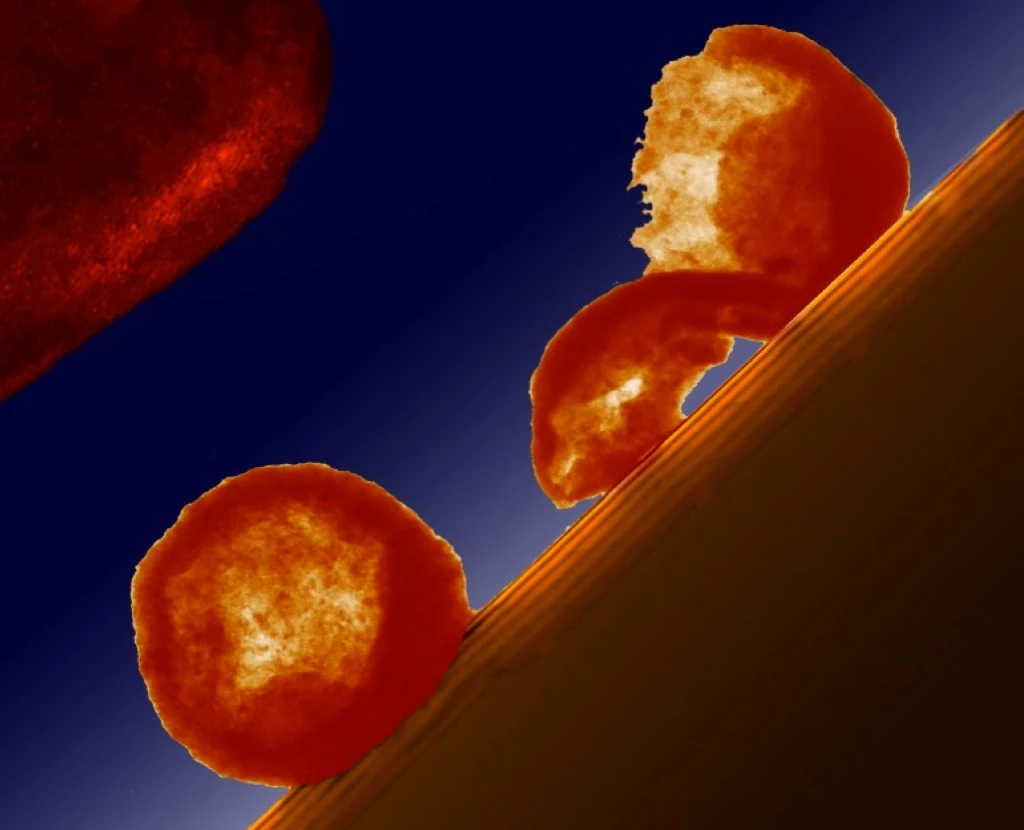
In situ TEM Nanomechanics
We focus on novel experimental methods to investigate deformation mechanisms in small volumes. In particular, we use in situ TEM techniques such as quantitative nanocompression to both measure the mechanical properties and observe the microstructural evolution of nanoscale volumes simultaneously.
Selected papers
- Visualization and validation of twin nucleation and early-stage growth in magnesium
- In situ transmission electron microscopy investigation of electroplasticity in single crystal nickel
- Achieving large uniform tensile elasticity in microfabricated diamond
- Defect reconfiguration in a Ti–Al alloy via electroplasticity
- Twin nucleation from a single ⟨c+a⟩ dislocation in hexagonal close-packed crystals
Our sponsors over the years
- Office of Naval Research
- National Science Foundation
- DOE Office of Science
- DOE Basic Energy Sciences
- DARPA
- NASA
- Toyota Research Institute
- Dow
- Boeing
- General Motors